


 (elements are drawn from
 ) is
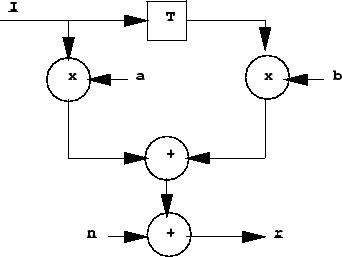
transmitted over a
channel which is characterized by tapped delay-line with coefficients
and
) is
transmitted over a
channel which is characterized by tapped delay-line with coefficients
and  .
The observation is further corrupted by additive white Gaussian noise.
The following sequence
.
The observation is further corrupted by additive white Gaussian noise.
The following sequence  is observed at the output of the tapped delay line


 , determine the most likely input
sequence
, determine the most likely input
sequence  . Clearly, show how you arrived at your solution.
 and
and
 ,
respectively? Explain.
,
respectively? Explain.
 and
and  , in the second, fourth, and sixth symbol period the channel
coefficients are
, in the second, fourth, and sixth symbol period the channel
coefficients are 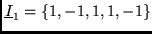 and
and 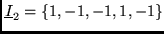 .
.
Explain how the Viterbi Algorithm must be modified to account for the time-varying coefficients.
 . Find the
most likely input sequence
. Find the
most likely input sequence  .
.